
📞 +91 9262343434

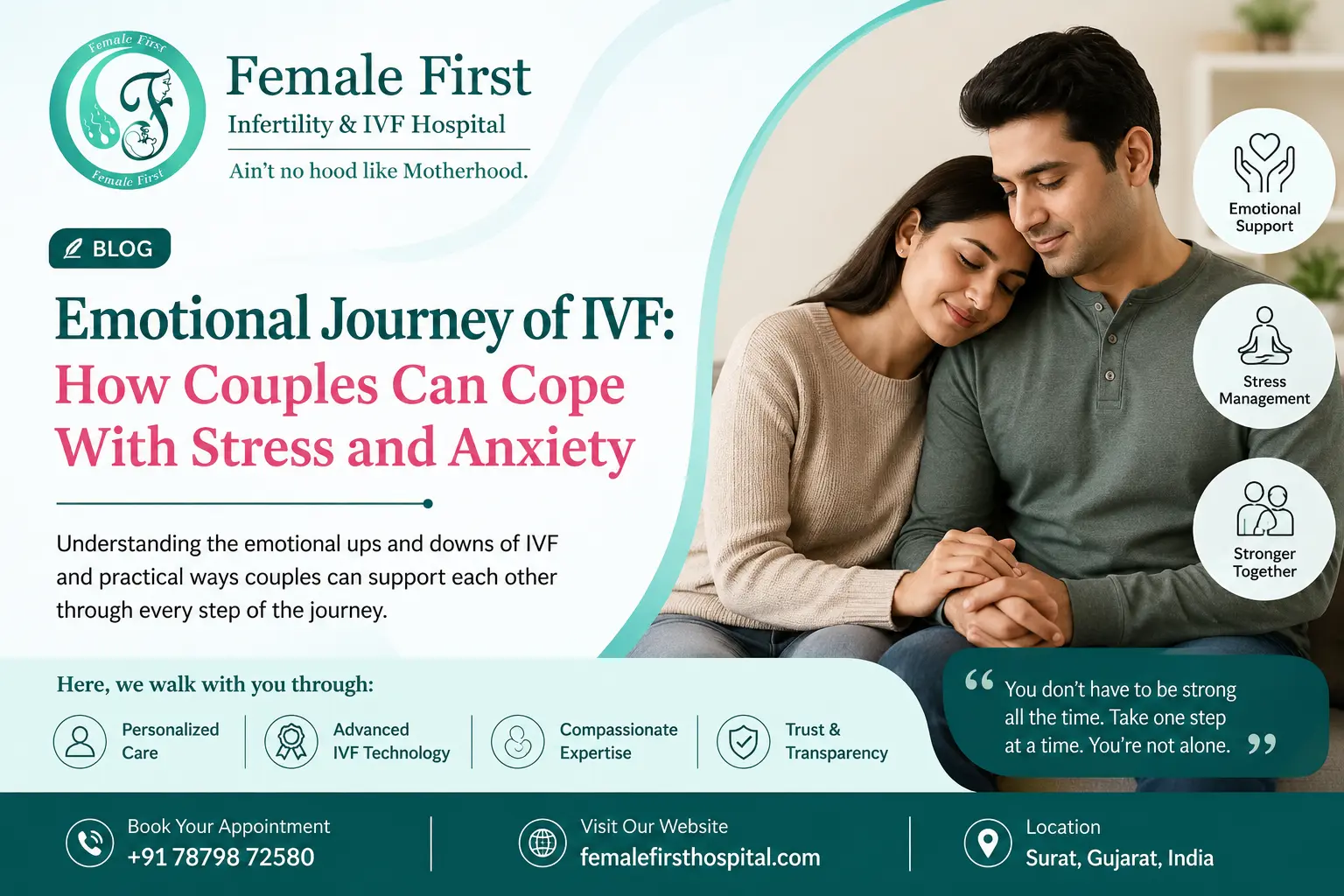
Most couples prepare thoroughly for the medical side of IVF. They research success rates, compare clinics, understand the injections, and plan their finances. What catches many of them off guard is the emotional side: the waiting, the uncertainty, the hope that rises and falls with every scan and every phone call from the lab.
If you are starting IVF treatment in Surat or anywhere else, or are already in the middle of a cycle, understanding what you are likely to feel, and why, makes the process far easier to manage. Stress during IVF is not a sign of weakness, and it does not mean you are handling things badly. It is a normal response to a genuinely demanding situation. What matters is having practical ways to cope, so that anxiety does not take over your daily life or your relationship.
This guide walks through the emotional stages of an IVF cycle, the challenges couples most commonly face, and coping strategies that actually help.
Why IVF Is Emotionally Demanding
IVF combines several stress factors that rarely occur together in ordinary life:
Uncertainty at every stage. Unlike most medical treatments, IVF has checkpoints where things can change: how many eggs are retrieved, how many fertilise, how many embryos develop, whether the transfer leads to a pregnancy. Each checkpoint brings fresh anticipation, and each one is largely outside your control.
High personal stakes. For most couples, this is not just a procedure. It represents years of hoping for a child, and often several earlier attempts at conceiving naturally or through IUI treatment in Surat before moving to IVF. That history adds weight to every result.
Physical strain that feeds emotional strain. Hormone injections, frequent blood tests, ultrasound monitoring, and the retrieval procedure all take a toll on the body. Hormonal medications can also directly affect mood, making some women feel more tearful, irritable, or anxious than usual. Knowing that this is partly a medication effect, and temporary, helps many patients feel less alarmed by their own reactions.
A fixed rhythm you cannot speed up. An IVF cycle runs on the body’s schedule. There is nothing you can do to make the two-week wait shorter, and that helplessness is one of the hardest parts of the process.
The Emotional Stages of an IVF Cycle
Every couple’s experience is different, but certain feelings tend to show up at predictable points in the cycle. Knowing what to expect can soften the impact.
Before the cycle begins
This stage often mixes relief with nervousness. Relief, because after months or years of trying, you finally have a concrete plan. Nervousness, because IVF makes the situation feel real and serious. Many couples also feel information overload at this stage: medication schedules, consent forms, cost discussions, and new medical terms all arrive at once. Writing questions down before appointments, and asking your doctor to explain anything unclear, reduces this early anxiety considerably. Reading a clear patient guide on what to expect during IVF treatment before your first visit also helps, because familiar steps feel far less frightening than unknown ones. And if you are still weighing how to choose IVF or IUI treatment, settle that question with your specialist first, so you enter the cycle confident in the decision rather than second-guessing it midway.
During stimulation and monitoring
Daily injections and frequent clinic visits make the treatment feel constant. Some women describe this phase as living in two-day blocks between scans. Mood swings from hormonal medication are common here. Partners should know this in advance so that irritability or tearfulness is met with patience rather than confusion.
Egg retrieval and fertilisation reports
The days after retrieval bring the first hard numbers: how many eggs were collected, how many fertilised, how the embryos are developing. These daily updates from the embryology lab can feel like exam results. It helps to remember that numbers dropping at each stage is biologically normal. Not every egg becomes an embryo, and that does not mean the cycle is failing.
The two-week wait
Almost every IVF patient will tell you this is the hardest part. After the embryo transfer, there is nothing to do except wait for the pregnancy test. The temptation to analyse every twinge, symptom, or absence of symptoms is intense. Early pregnancy symptoms and progesterone side effects overlap almost completely, so symptom-watching tells you nothing reliable and only fuels anxiety. The most useful advice for this period is simple: plan your days so they are full of things you enjoy or need to do, and avoid taking a home pregnancy test before the date your clinic gives you. Testing too early produces misleading results in both directions.
After the result
A positive result brings joy, but often mixed with cautious anxiety until the first scan confirms a heartbeat. A negative result brings grief, and it deserves to be treated as grief, not brushed aside. Couples need time to process a failed cycle before deciding on next steps. A good fertility specialist will schedule a review appointment to discuss what the cycle revealed and what could be adjusted, which turns a painful ending into useful information for the future.
Common Emotional Challenges Couples Face During IVF
Anxiety and fear of failure
The question “what if it doesn’t work?” sits in the background of the entire process. This fear is rational, because no clinic can guarantee success in a single cycle. What helps is reframing expectations around the treatment journey rather than a single attempt. Many couples conceive on a second or third cycle, and doctors often learn valuable information from a first cycle that improves the plan for the next one. Going in with the understanding that IVF may be a process rather than a one-time event reduces the crushing weight placed on any single result.
Financial stress
IVF is a significant financial commitment, and worrying about money while also worrying about the outcome multiplies the pressure. The most effective way to reduce financial anxiety is clarity before you begin: ask your clinic for a complete breakdown of the IVF cost in Surat before starting. That means medication charges, add-on procedures such as ICSI treatment in Surat if your case needs it, and embryo storage and frozen transfer fees, so there are no surprises mid-cycle. Deciding in advance how many cycles you are financially prepared for also removes a painful decision from the emotionally raw moment after a negative result.
Social pressure and intrusive questions
In many families, questions about having children come constantly, from relatives, neighbours, and colleagues. Couples going through IVF often feel forced to either lie or share private medical details they would rather keep to themselves. It can help to remember how common this situation is: according to the World Health Organization, roughly one in six adults worldwide experiences infertility at some point, even if no one around you talks about it openly. There is no obligation to explain your treatment to anyone. Deciding together, as a couple, who you will tell and what you will say gives you a shared script and prevents one partner from being caught off guard. A simple, polite, closed answer such as “we’ll share good news when we have it” ends most conversations.
Social media adds its own pressure. During treatment, feeds full of pregnancy announcements and baby photos can be genuinely painful. Muting certain accounts for a few months is not petty; it is sensible self-protection.
Strain on the relationship
Partners often cope in different ways. One may want to talk through every detail while the other prefers to stay busy and not dwell on it. Neither style is wrong, but the mismatch can feel like distance or lack of care. IVF also changes intimacy, since conception becomes clinical and scheduled. Naming these dynamics openly, rather than silently resenting them, keeps the treatment from driving a wedge between you. Many couples later say IVF made their relationship stronger, but that outcome comes from deliberate communication, not luck.
Emotional exhaustion
When treatment stretches across months or multiple cycles, a specific kind of tiredness sets in: the fatigue of sustained hope. Signs include losing interest in things you normally enjoy, dreading clinic visits, or feeling numb rather than nervous about results. Emotional exhaustion is a signal to slow down, not to push harder. Taking a deliberate break between cycles, with your doctor’s guidance, often restores both emotional reserves and physical readiness.
Coping Strategies That Actually Help
Communicate openly with your partner
Set aside regular time to talk about how each of you is doing, separate from logistics about injections and appointments. A useful practice is asking “do you want comfort or solutions?” before responding to your partner’s worries, because offering the wrong one is a common source of friction. Also share the practical load: attending appointments together, dividing responsibility for medication schedules, and handling family questions as a team all reduce the feeling that one partner is carrying the treatment alone.
Consider counselling or a support group
Talking to a counsellor who understands fertility treatment is not a last resort for couples in crisis; it is a practical tool, the same way physiotherapy supports an orthopaedic patient. A counsellor gives you a space to voice fears you may be hiding from your partner to protect them. Support groups, whether in person or online, offer something different but equally valuable: the relief of talking to people who genuinely understand, without needing to explain the basics. Hearing how others handled a failed cycle or the two-week wait provides both practical ideas and reassurance that your reactions are normal.
Practise stress-reduction techniques
Mindfulness, deep breathing, gentle yoga, and meditation are frequently recommended during IVF for a straightforward reason: they give you a way to interrupt spirals of anxious thinking. Even ten minutes of guided breathing or a daily walk changes how the rest of the day feels. Light exercise, unless your doctor advises otherwise, also helps regulate sleep and mood, and pairs well with the broader lifestyle changes that support IVF success. The goal is not to eliminate stress, which is impossible, but to prevent it from compounding.
Sleep deserves special mention. Anxiety disturbs sleep, and poor sleep worsens anxiety, creating a loop. Keeping a consistent bedtime, limiting late-night searching of IVF forums, and moving your phone away from the bed protect the single most restorative resource you have during treatment.
Set realistic expectations from the start
Ask your fertility specialist for an honest, personalised assessment of your chances based on your age, diagnosis, and test results, rather than relying on general statistics or other couples’ stories. It also helps to understand the factors that affect IVF success rates, so you know which of them apply to your situation and which do not. Understand what each stage involves and where attrition normally happens, so that a drop from ten eggs to three good embryos does not feel like a disaster when it is actually a normal outcome. Realistic expectations do not mean pessimism. They mean hope placed on solid ground, which is far more durable than hope built on assumptions.
Limit the information spiral
There is a difference between being informed and being consumed. Endless late-night reading of forums, success-and-failure stories, and symptom threads almost always increases anxiety without improving your outcome. Choose one or two trusted sources of information, such as the NHS guide to IVF or the Mayo Clinic’s overview of the procedure, direct your questions to your doctor, and give yourself permission to stop researching once your plan is in place.
Keep the rest of your life running
IVF can quietly expand until it fills every conversation and every plan. Deliberately maintaining your work, hobbies, friendships, and small routines keeps your identity larger than the treatment. This is not denial; it is balance, and it makes the difficult days easier to absorb because they land in a life that still contains other good things.
How Partners Can Support Each Other
The partner not undergoing the physical procedures sometimes feels like a spectator, unsure how to help. There is a lot to do: learn the medication schedule well enough to help manage it, attend scans and consultations, take over daily chores during the heavier phases of treatment, and act as the buffer against intrusive family questions. Emotional presence matters as much as practical help. You do not need perfect words after a disappointing report; sitting together quietly is often enough.
It is also worth remembering that the supporting partner is going through their own version of this journey, with their own fears, and often with the added pressure of feeling they must stay strong. Both partners are allowed to struggle, and both deserve support.
When to Seek Professional Help
Everyday stress during IVF is expected. But certain signs suggest it is time to involve a mental health professional:
- Persistent low mood or hopelessness that lasts most of the day, for weeks
- Anxiety that interferes with work, sleep, or daily functioning
- Withdrawing completely from friends and family
- Constant conflict with your partner that you cannot resolve between yourselves
- Feeling unable to face continuing treatment, yet unable to decide to stop
Fertility counselling exists precisely for these situations. Seeking help early usually means a few productive sessions rather than a long struggle. If you are undergoing fertility treatment in Surat or elsewhere, ask your doctor for a referral; most established IVF clinics either have a counsellor available or can connect you with one experienced in fertility-related stress.
Frequently Asked Questions
Does stress reduce IVF success rates?
Ordinary, everyday stress has not been shown to determine whether an IVF cycle succeeds, so you should never blame yourself for a negative result because you felt anxious. That said, managing stress still matters enormously, because it affects your wellbeing, your relationship, your sleep, and your ability to continue treatment if more than one cycle is needed. Cope with stress for your own sake, not out of fear that anxiety will ruin the cycle.
How can I get through the two-week wait?
Plan the two weeks in advance so the days are structured: work, light activities, time with supportive people, and small things to look forward to. Avoid symptom-spotting, since medication side effects mimic early pregnancy signs, and avoid early home testing, which is unreliable and emotionally risky. Some couples find it helps to plan a small treat for test day regardless of the result, so the date holds something kind either way.
Is it normal to feel like giving up during IVF?
Yes. Most couples have moments, especially after a setback, when stopping feels like the only bearable option. Feeling this way does not obligate you to act on it immediately. Give yourself time after a failed cycle before making decisions, discuss the medical picture with your doctor, and if the feeling persists, a fertility counsellor can help you work out whether you need a break, a change of approach, or a different path entirely. Pausing and stopping are both legitimate choices, and so is continuing.
Should we tell family and friends we are doing IVF?
There is no right answer, only what works for you as a couple. Telling a small circle of trusted people gives you support and cover for appointments. Telling everyone invites constant questions about results. Many couples choose a middle path: one or two confidants each, and a polite deflection ready for everyone else. Whatever you decide, decide it together so you are never contradicting each other.
How soon after a failed cycle can we try again?
Medically, many couples can begin another cycle after one or two menstrual cycles, but the right timing depends on your individual case and, just as importantly, on your emotional readiness. If you have embryos stored through embryo freezing in Surat, the next attempt is often a frozen embryo transfer, which is physically lighter than a full fresh cycle. Use the gap for a detailed review with your fertility specialist about what the previous cycle showed and whether the protocol should change. Starting again before you have processed the previous result often makes the next cycle harder than it needs to be.
The Journey Is Medical and Emotional in Equal Measure
Coping with IVF is not about staying positive all the time. It is about building a structure around yourself, honest communication with your partner, realistic expectations, professional support when needed, and a daily life that continues alongside treatment, so that the hard moments have somewhere soft to land.
If you are considering IVF or struggling with the emotional weight of treatment, talk to your fertility team about it openly. At Female First Hospital, a trusted IVF centre in Surat, our specialists see the emotional side of fertility treatment as part of the treatment itself, and we encourage every couple to raise these concerns during consultations. If you would like to discuss your situation with our team, you can book an IVF consultation in Surat at a time that suits you. You do not have to carry this journey silently, and you do not have to carry it alone.