
📞 +91 9262343434

Blastocyst Transfer in Surat
- Home
- Facilities
- Blastocyst Transfer in Surat
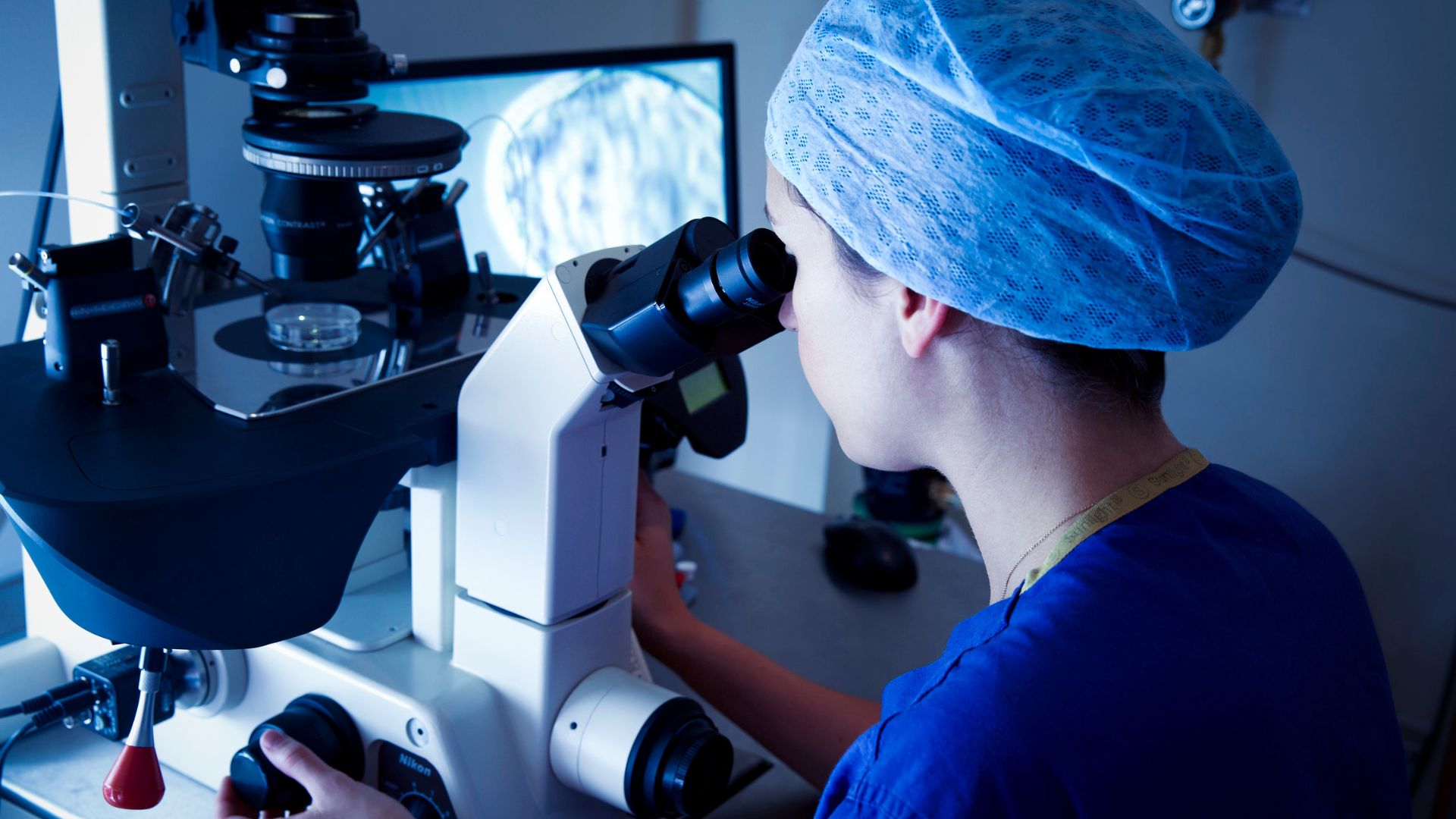
Female First Hospital offers advanced blastocyst transfer in Surat as part of our IVF–ICSI programme. Under the care of Dr. Sweta Patel, our embryology team cultures embryos to the blastocyst stage (day 5–6) before transfer — selecting the strongest embryos to improve the chances of a successful pregnancy.
What Is Blastocyst Transfer?
- A blastocyst is an embryo that has developed for five to six days after fertilization.
- With blastocyst transfer, embryos are cultured in the laboratory incubator to the blastocyst stage before being transferred to the womb.
- One or two of the best-quality blastocysts are then selected and implanted. A blastocyst must attach itself to the wall of the womb for pregnancy to occur.
When Is Blastocyst Transfer Done?
- It is often used to improve pregnancy chances after single embryo transfer, particularly for younger women with a good prognosis from IVF.
- Your doctor may suggest it if you produced good-quality embryos in a previous IVF cycle but they failed to implant.
- It is not usually recommended when fewer than around five good-quality day-5 embryos are available.
How Does Blastocyst Transfer Work?
The procedure is similar to a normal embryo transfer, but instead of transferring on day two or three, the embryos are cultured for five to six days first. This extra time lets embryologists identify the embryos with the best development potential.
What Are the Risks of Blastocyst Transfer?
- Not all embryos develop into blastocysts — some stop developing at the four-cell stage (day two).
- In some cases, the embryologist may advise a day two–three transfer instead, rather than risk having no blastocyst to transfer on day five–six.
- As with any embryo transfer, transferring more than one blastocyst raises the chance of a multiple pregnancy, so single blastocyst transfer may be considered.
What Are My Chances of Having a Baby with Blastocyst Transfer?
Female fertility diminishes with age, so if you are using your own eggs, the younger you are, the higher your chances of success. For women receiving stimulated IVF using fresh blastocysts from their own eggs, up to 45% of cycles reaching blastocyst transfer resulted in a live birth for women under 35 (figures to be confirmed by the clinic). Success also depends on individual factors, which our team will discuss as part of your infertility treatment plan.
Blastocyst Transfer, Freezing & Genetic Testing
Surplus good-quality blastocysts can be frozen for future transfer without repeating stimulation. Blastocyst-stage embryos are also ideal for PGD & PGS genetic screening, which checks embryos for genetic conditions before transfer.
Why Choose Female First Hospital for Blastocyst Transfer in Surat
- Experienced embryology team — under the care of Dr. Sweta Patel, with 15+ years in reproductive medicine.
- Advanced laboratory — controlled culture conditions to grow embryos to blastocyst stage.
- Complete IVF care — part of our full IVF & fertility treatments, from evaluation to pregnancy care.
Day 3 Transfer vs Day 5 Blastocyst Transfer
| Factor | Day 3 (cleavage stage) | Day 5 (blastocyst) |
|---|---|---|
| Number of cells | 6 to 8 | 100 or more |
| Embryo selection | Harder to tell which embryos will keep growing | Only the strongest embryos reach this stage |
| Timing in the uterus | Earlier than in natural conception | Matches natural timing |
| Number transferred | Often two | Usually one, lowering the risk of twins |
| Best suited to | Very few embryos available | Several good embryos on day 3 |
How Blastocysts Are Graded
The embryologist grades every blastocyst on three features: how far it has expanded, the quality of the inner cell mass (which becomes the baby) and the quality of the outer layer, the trophectoderm (which becomes the placenta). A grade is a guide to potential, not a guarantee. Lower-grade blastocysts also lead to healthy babies, and your doctor will explain your embryo report in simple terms.
Preparing for Your Transfer Day
- Take your progesterone and other medicines exactly as prescribed.
- You will usually be asked to come with a comfortably full bladder, which helps the ultrasound view.
- Eat normally. No anaesthesia is needed.
- Avoid strong perfumes, as embryos are sensitive to them in the lab area.
After the Transfer
You can go home after a short rest. Strict bed rest is not needed and does not improve results. Continue your medicines, avoid heavy lifting and intense exercise, and try to keep your routine calm and normal. A blood pregnancy test is done about 10 to 14 days later. Mild cramping or spotting can occur and does not predict the result either way. For a full picture of the journey, read what to expect during IVF treatment.
Frequently Asked Questions
Is blastocyst transfer suitable for everyone?
Not always. If only one or two embryos are available on day 3, your doctor may prefer an earlier transfer rather than risk having none on day 5.
Is the transfer painful?
No. It feels similar to a Pap smear and takes a few minutes.
What if no embryo reaches the blastocyst stage?
This can happen, and it gives important information about egg or sperm quality. Your doctor will review the cycle and adjust the plan, which may include ICSI treatment in Surat or a change of protocol.
Does blastocyst culture cost extra?
It may add a laboratory charge depending on your plan. It is itemised in the estimate for IVF cost in Surat.
Book a Consultation
To find out whether blastocyst transfer is right for you, book a consultation with Dr. Sweta Patel at Female First Hospital, Surat.