
📞 +91 9262343434

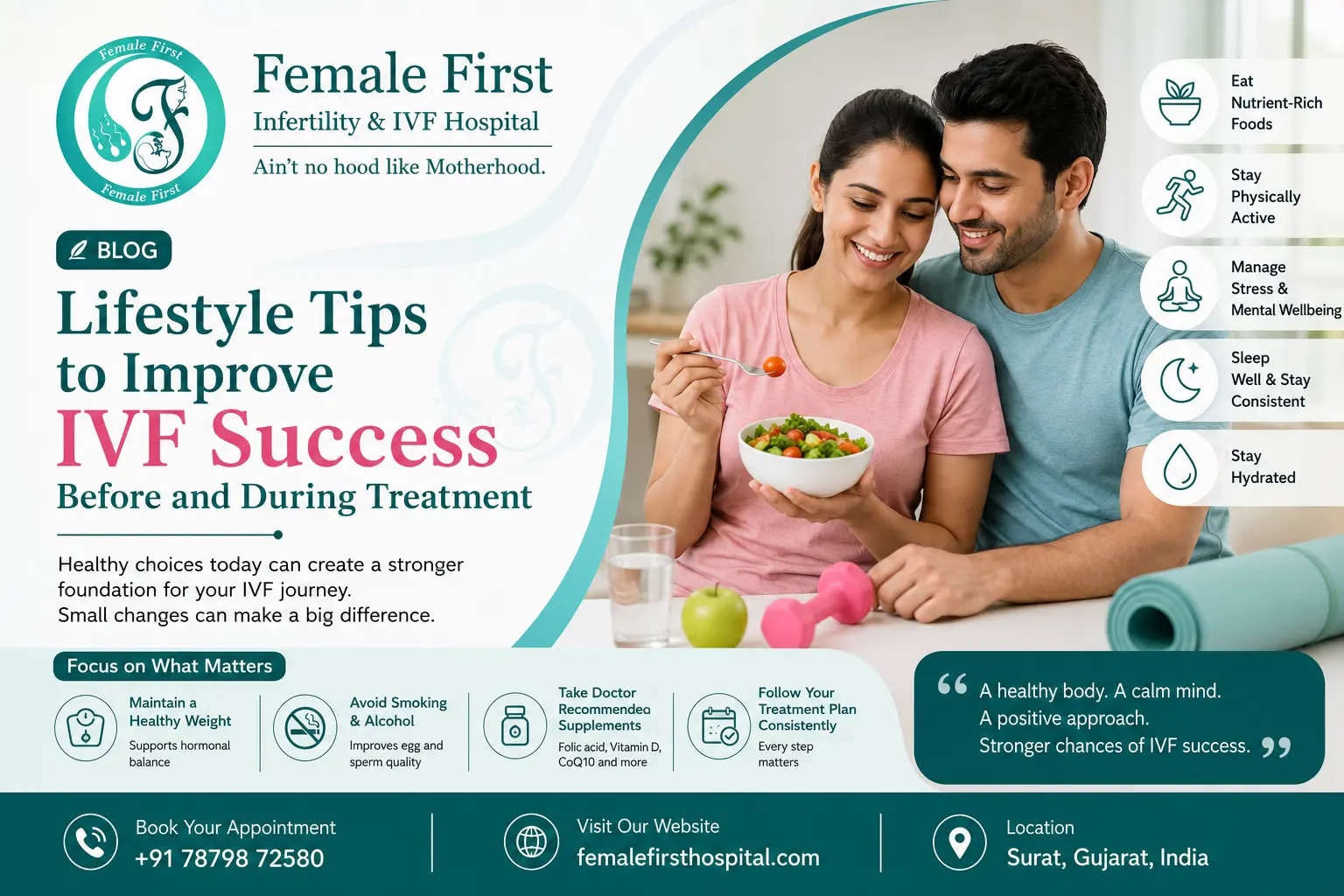
When couples begin IVF treatment in Surat or anywhere else, most of their attention naturally goes to the medical side: the protocol, the medications, the clinic’s lab quality. All of that matters. But there is one factor that sits entirely in your hands, and it is the one patients most often underestimate — how you eat, sleep, move, and live in the months around your cycle.
Lifestyle changes cannot replace good medical treatment, and they cannot guarantee a pregnancy. What they can do is give your eggs, sperm, and body the best possible conditions to respond to treatment. Since every cycle demands so much emotionally and financially, it makes sense to remove the obstacles you actually control.
Here is a practical, realistic guide to the habits worth changing, when to start, and what to avoid, both before your cycle begins and while it is underway.
Why Lifestyle Matters More Than Most Couples Realise
Eggs and sperm are not produced overnight. The egg that will be retrieved in your cycle begins its final maturation roughly three months earlier, and sperm take about the same time to develop fully. This means the food, sleep, stress, and toxins of the past 90 days are quietly written into the quality of the eggs and sperm your doctor will work with.
That 90-day window is the single most useful fact in this entire article, because it answers the most common question patients ask: when should we start? The answer is about three months before your planned cycle, and ideally earlier. Changes made the week before egg retrieval help very little; changes sustained over a full season can genuinely improve the raw material your treatment depends on.
It also explains why lifestyle matters even in advanced procedures. Couples sometimes assume that if ICSI treatment in Surat is planned, where a single sperm is injected directly into the egg, sperm health becomes irrelevant. It does not. ICSI solves the problem of sperm reaching or penetrating the egg, but the genetic quality of that sperm still shapes how the embryo develops afterwards.
Eat for Egg and Sperm Quality, Not for Perfection
There is no magical “IVF diet,” and chasing one only adds stress. What consistently helps is a simple, sustainable pattern closer to a Mediterranean style of eating:
- Protein at every meal — dal, paneer, eggs, fish, chicken, sprouts, and nuts support hormone production and give the ovaries the building blocks they need during stimulation.
- Whole grains over refined carbs — millets, brown rice, and whole wheat keep blood sugar steadier, which supports hormonal balance. Frequent sugar spikes work against it.
- Healthy fats — ghee in moderation, nuts, seeds, and olive oil. Extremely low-fat diets can disturb hormone levels, so do not fear good fats.
- Colourful vegetables and fruits — the antioxidants in them help protect eggs and sperm from oxidative damage, which is one of the known enemies of gamete quality.
- Plenty of water — hydration matters more than people think, especially during stimulation when the ovaries are working hard.
Just as important is what to reduce: deep-fried food, packaged snacks, trans fats, and excessive sugar. You do not need to eliminate every treat; you need the overall pattern to be right. The Mayo Clinic’s guidance on protecting fertility makes the same point — everyday habits, sustained over time, are what move the needle.
One more thing worth doing early: start a folic acid supplement before your cycle if your doctor has prescribed one, since it is standard preparation for any pregnancy. Discuss all other supplements individually rather than self-prescribing, because more is not better, and some interfere with treatment.
Bring Your Weight Into a Healthy Range — Gradually
Body weight influences IVF at several points: how the ovaries respond to stimulation medication, egg quality, implantation, and pregnancy health afterwards. This applies in both directions. Being significantly overweight can blunt the response to medications and disturb hormone levels, while being significantly underweight can suppress ovulation and thin the uterine lining.
The key word is gradually. Crash dieting in the weeks before a cycle is worse than doing nothing, because rapid weight loss is itself a physiological stress that disrupts hormones. If your BMI is outside the healthy range, raise it with your fertility specialist three to six months before treatment and aim for slow, steady change through food quality and regular movement. Even a modest improvement, without reaching a “perfect” number, can improve how your body responds.
Stop Smoking and Alcohol — Both Partners, No Exceptions
If you change only one thing from this entire list, make it this. Smoking damages egg quality, reduces ovarian reserve, harms sperm count and DNA integrity, and lowers the chances of implantation. It is one of the few lifestyle factors with a clear, consistent negative effect on fertility treatment, and the damage applies to both partners equally. This includes tobacco in all forms — cigarettes, gutkha, and pan masala — and passive smoke exposure at home matters too.
Alcohol is a similar story during treatment. The safest and simplest advice is for both partners to stop completely from at least three months before the cycle and throughout treatment, since sperm contributed on retrieval day reflects the drinking habits of the previous three months. The NHS overview of infertility lists smoking and alcohol among the first modifiable factors doctors address, and for good reason: they are free to fix and entirely in your control.
Caffeine does not need to be eliminated, but moderation helps. Most specialists suggest keeping it to one or two cups of tea or coffee a day during treatment rather than the five or six many of us drink without noticing.
Exercise: Moderate Is the Sweet Spot
Regular moderate exercise — brisk walking, swimming, cycling at an easy pace, light strength training, or yoga — improves insulin sensitivity, mood, sleep, and circulation, all of which support treatment. Aim for about 30 minutes most days in the months before your cycle.
What changes during treatment is intensity. Once ovarian stimulation begins, the ovaries enlarge significantly, and high-impact workouts, heavy lifting, or intense twisting movements are usually restricted because they increase the risk of complications, including ovarian torsion. After embryo transfer, gentle walking is encouraged, but strict bed rest is not — this is one of the most persistent myths in IVF. Lying in bed for days does not improve implantation and often worsens anxiety. Normal light activity is both safe and better for you, unless your doctor has given specific instructions otherwise.
The practical rule: train moderately in the preparation months, then downshift to walking and gentle movement from stimulation through the two-week wait, exactly as your clinic advises.
Protect Your Sleep Like It Is Part of the Protocol
Sleep is when hormone regulation, cellular repair, and stress recovery actually happen, yet it is usually the first thing couples sacrifice to late-night research and worry. Aim for seven to eight hours at a consistent time. A few habits make this achievable even mid-cycle:
- Fix a regular sleep and wake time, including weekends.
- Keep phones away in the last 30–45 minutes before bed — late-night scrolling through IVF forums is the enemy of both sleep and calm.
- Keep the bedroom dark and cool; melatonin, your natural sleep hormone, is sensitive to light.
- Avoid caffeine after mid-afternoon.
Poor sleep and anxiety feed each other in a loop, and breaking that loop from the sleep side is often easier than from the anxiety side.
Manage Stress — Without Blaming Yourself for Feeling It
Yoga, meditation, pranayama, and mindfulness practices are recommended during IVF because they give you a reliable way to interrupt anxious spirals, improve sleep, and stay steady through the waiting periods. Even ten minutes of daily breathing practice changes how the rest of the day feels.
Two clarifications matter here. First, ordinary stress does not doom an IVF cycle, so never blame yourself for a result because you felt anxious — the goal of stress management is your wellbeing and endurance, not guilt-free perfection. Second, stress management is a skill for the whole journey, not just the cycle. We have covered this side of treatment in depth in our guide on the emotional journey of IVF and how couples can cope with stress and anxiety, which pairs naturally with this article.
Knowledge itself is also a stress reducer. Couples who understand what to expect during IVF treatment stage by stage consistently report feeling calmer, simply because familiar steps are less frightening than unknown ones.
The Male Partner’s Lifestyle Counts for Half the Equation
Fertility preparation is still wrongly treated as the woman’s job in many households, even though sperm quality contributes half of every embryo. For the male partner, the priorities are:
- Quit smoking and alcohol completely for at least three months before the cycle, as above.
- Avoid heat around the testes — long hot baths, saunas, laptops resting directly on the lap for hours, and very tight underwear all raise scrotal temperature, which suppresses sperm production.
- Sleep and exercise on the same pattern recommended above; both influence testosterone and sperm parameters.
- Eat antioxidant-rich foods — fruits, vegetables, nuts, and seeds support sperm DNA integrity.
Good egg and sperm quality also improve the odds that embryos keep developing to day five in the lab, which is exactly what makes blastocyst transfer in Surat possible — and blastocyst-stage transfers allow embryologists to select the most viable embryo.
Start With a Complete Fertility Work-Up
Lifestyle changes work best when they are targeted, and targeting requires information. A thorough infertility test in Surat at a good centre — hormone profiles, ovarian reserve testing, semen analysis, and ultrasound evaluation — tells your doctor exactly which factors are at play and which lifestyle levers matter most for your specific case. For example, weight management becomes a priority in PCOS, while antioxidant-focused changes matter more when sperm DNA quality is the concern.
This is also the honest limit of lifestyle advice: habits support treatment, but they cannot overcome blocked tubes, severe male factor infertility, or diminished ovarian reserve on their own. The winning combination is targeted medical treatment plus a well-prepared body, never one without the other. Always run supplements and major routine changes past the best IVF doctor in Surat available to you rather than following generic internet protocols, because advice that helps one diagnosis can be irrelevant or counterproductive for another.
There is a financial logic to all this preparation too. Given the IVF cost in Surat and everywhere else, each cycle is a serious investment — three months of disciplined preparation is the cheapest thing you will ever add to your treatment, and it protects everything else you are spending.
Frequently Asked Questions
When should we start lifestyle changes before IVF?
Ideally three months before your cycle begins, because that is roughly how long eggs and sperm take to mature. Starting earlier is even better, but do not conclude that starting late is pointless — better sleep, no alcohol, and lower stress help at any stage. The only mistake is attempting drastic changes, like crash dieting, in the final weeks.
Can I exercise after embryo transfer?
Gentle walking and normal daily activity, yes. Intense workouts, heavy lifting, and high-impact sports, no — wait until your clinic clears you. Complete bed rest is not required and is not recommended; it does not improve implantation rates and tends to increase anxiety.
Does coffee affect IVF success?
Moderate caffeine, meaning one or two cups a day, is generally considered acceptable during treatment. Heavy caffeine intake is discouraged. If cutting down feels hard, taper gradually in the preparation months rather than stopping abruptly mid-cycle, which can trigger headaches you do not need on top of everything else.
My husband’s reports are normal. Does his lifestyle still matter?
Yes. A normal semen analysis measures count, movement, and shape, but it does not fully capture sperm DNA quality, which lifestyle factors like smoking, heat, and poor diet can damage. Since sperm contribute half of the embryo’s genetic material, the three-month preparation applies to both partners regardless of test reports.
Can lifestyle changes alone fix infertility?
Sometimes mild issues, such as ovulation problems linked to weight, do improve with lifestyle change alone. But structural and severe factors — blocked fallopian tubes, very low sperm counts, endometriosis, diminished ovarian reserve — need medical treatment. The right approach is a proper fertility evaluation first, then lifestyle preparation layered on top of whichever treatment your case actually needs. For a general reference on causes and evaluation, MedlinePlus’s infertility resource is a reliable starting point.
Give Every Cycle Its Best Foundation
IVF asks a lot from couples, and the months of preparation are your chance to answer back — to walk into the cycle knowing your body is as ready as you could make it. Eat simply and well, keep moving moderately, protect your sleep, drop tobacco and alcohol completely, manage stress with practices that fit your life, and let a proper medical evaluation guide the rest.
If you are planning treatment and want a personalised preparation plan for your specific diagnosis, our team at Female First Hospital, recognised as a best IVF centre in Surat, builds lifestyle guidance into every treatment plan. You can book an IVF consultation in Surat and start your three-month preparation window with a clear roadmap instead of guesswork.