
📞 +91 9262343434

Embryo Freezing in Surat
- Home
- Facilities
- Embryo Freezing in Surat
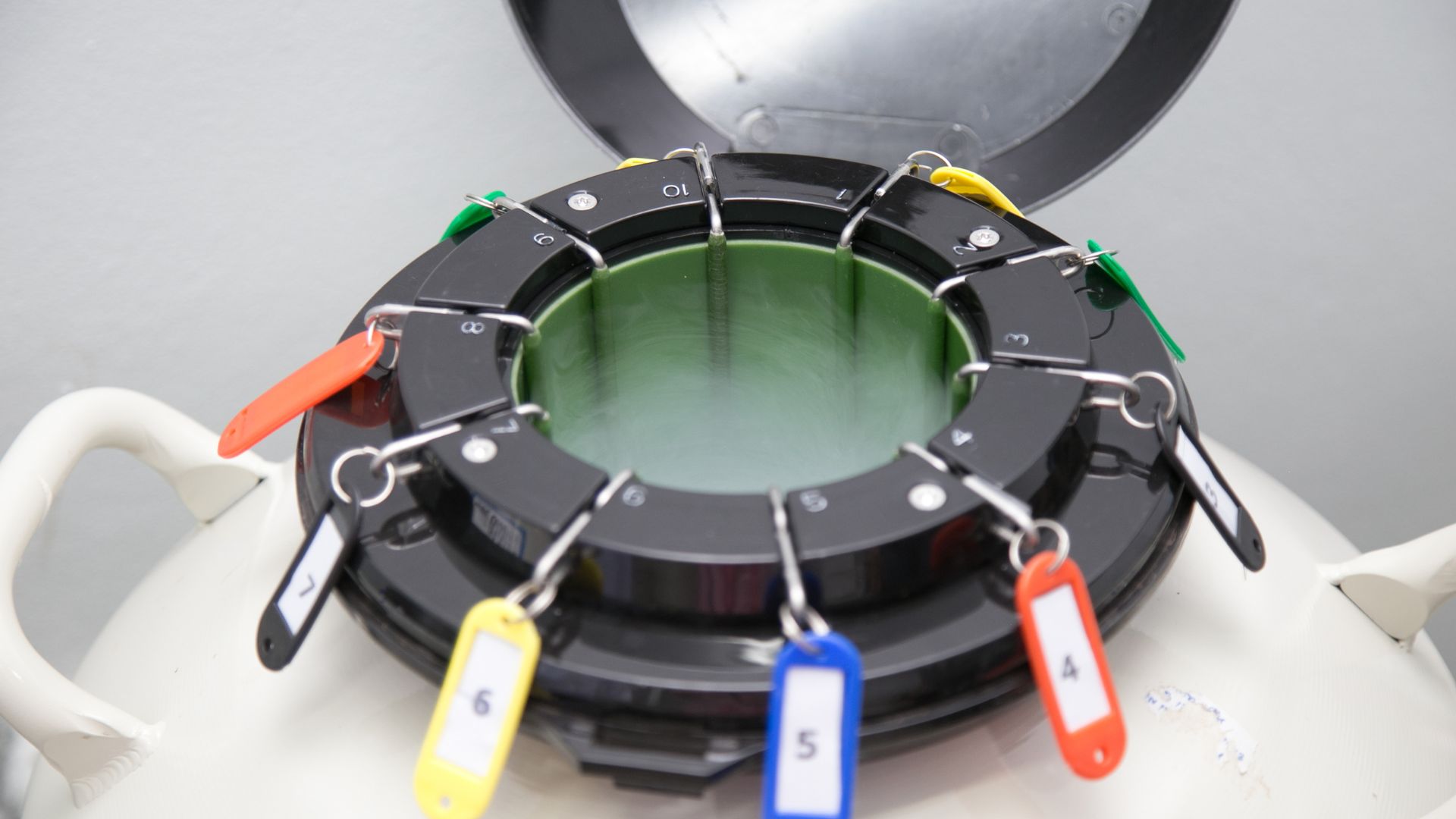
Female First Hospital offers advanced embryo freezing in Surat, along with egg and sperm freezing, using state-of-the-art cryopreservation and vitrification. Led by Dr. Sweta Patel‘s experienced embryology team, we store embryos, eggs and sperm at –196°C in liquid nitrogen, ensuring long-term viability and preserving your fertility options for the future.
Embryo Freezing & Vitrification
After an IVF–ICSI cycle, any surplus healthy embryos can be frozen for future use. Embryos can be preserved at any stage from day 1 (one-cell) to the blastocyst stage (day 5–6). We use vitrification — a rapid freezing technique that minimizes damage and improves survival rates compared to older slow-freezing methods.
Why freeze embryos?
- Reduces the risk of multiple pregnancies
- Allows future transfer without repeating ovarian stimulation
- Cost-effective for subsequent cycles
Egg (Oocyte) Freezing
Egg freezing is a breakthrough for women who want to preserve fertility. It is part of our wider egg freezing & fertility preservation programme, and is often chosen due to:
- Advancing age
- Medical treatments (chemotherapy, radiation)
- Personal choice to delay pregnancy
Best candidates:
- Women under 35 with good ovarian reserve
- Women planning pregnancy later or facing fertility risks
Process overview:
- Ovarian stimulation — fertility medication to produce multiple eggs
- Egg retrieval — performed under light sedation
- Vitrification — advanced rapid freezing for best survival rates
- Storage — secure long-term cryobank facilities
- Thaw & use — eggs fertilized via ICSI for IVF when ready
Semen (Sperm) Freezing
Sperm freezing is ideal for:
- Men undergoing cancer treatment
- Those facing surgeries or conditions affecting fertility
- Couples planning IVF cycles
Frozen sperm can be stored for years without increased risk of birth defects. Success rates with cryopreserved semen typically range from 40–50% (figures to be confirmed by the clinic).
Benefits of Fertility Preservation
- Pause your biological clock
- Avoid repeated stimulation cycles
- Maintain options for future family planning
Frozen eggs, embryos or sperm can later be used in IVF, or as part of egg donor and surrogacy programmes where needed.
Why Choose Female First Hospital for Embryo Freezing in Surat
- Latest vitrification technology — rapid freezing for the best survival rates.
- Experienced embryologists — under the care of Dr. Sweta Patel, with 15+ years in reproductive medicine.
- Secure long-term storage — reliable cryobank facilities at –196°C.
- Complete fertility care — freezing integrated with our full IVF & fertility treatments.
How Vitrification Works
Older freezing methods cooled cells slowly, which allowed ice crystals to form and damage them. Vitrification is an ultra-rapid freezing technique. Embryos, eggs or sperm are placed in a protective solution and cooled so quickly that the cell turns glass-like without forming ice. They are then stored in liquid nitrogen at -196 degrees Celsius, where all biological activity stops. With vitrification, the large majority of good-quality embryos survive thawing.
Who Should Consider Freezing?
- Couples with extra good-quality embryos after an IVF cycle
- Women at risk of ovarian hyperstimulation, where transfer is safer in a later cycle
- Cases where the uterine lining is not ready at the time of egg retrieval
- Couples having embryos tested genetically before transfer
- Women who wish to delay pregnancy for personal or career reasons
- Men and women about to start cancer treatment or surgery that may affect fertility
- Men who may not be available on the day of egg retrieval, or who need surgical sperm retrieval
If your main interest is preserving eggs for the future, see our detailed guide to egg freezing cost in India.
The Frozen Embryo Transfer (FET) Process
- Preparing the lining: the uterus is prepared with tablets or in a natural cycle, and monitored by ultrasound.
- Thawing: on the planned day, the embryologist warms the embryo and checks that it has survived.
- Transfer: the embryo is placed in the uterus through a thin catheter. It is quick and usually painless.
- Support and test: progesterone support continues, and a pregnancy test is done about two weeks later.
Embryos are most often frozen at day 5. Read how blastocyst transfer in Surat helps us choose the strongest embryo before freezing.
Fresh or Frozen Transfer: Which Is Better?
For many patients, success rates with frozen embryo transfer are as good as with fresh transfer, and in some situations better, because the body has recovered from stimulation. Your doctor will advise which is right for you based on hormone levels, the lining and the number of embryos.
Storage, Consent and Safety
Every sample is labelled with a double-witness system and stored in monitored liquid nitrogen tanks. Written consent from both partners is taken before freezing and before any embryo is used. Storage periods and renewals follow India’s ART regulations, and our team explains these clearly when you sign the consent.
Frequently Asked Questions
Does freezing harm the embryo?
Studies show that babies born from frozen embryos are as healthy as those born from fresh embryos.
How long can embryos stay frozen?
Frozen embryos do not age in storage. The permitted storage period is set by Indian ART regulations, which we explain during counselling.
Is freezing included in the IVF package?
It depends on the plan. Freezing and annual storage are itemised separately in our written estimate. See IVF cost in Surat for details.
Can sperm from surgical retrieval be frozen?
Yes. Sperm collected through TESA treatment in Surat or TESE treatment in Surat can be frozen for later ICSI cycles.
Book a Consultation
To learn more about embryo, egg or sperm freezing, book a consultation with Dr. Sweta Patel at Female First Hospital, Surat.